Should I Get a Second Opinion Before Shoulder Surgery?
should-i-get-a-second-opinion-before-shoulder-surgery
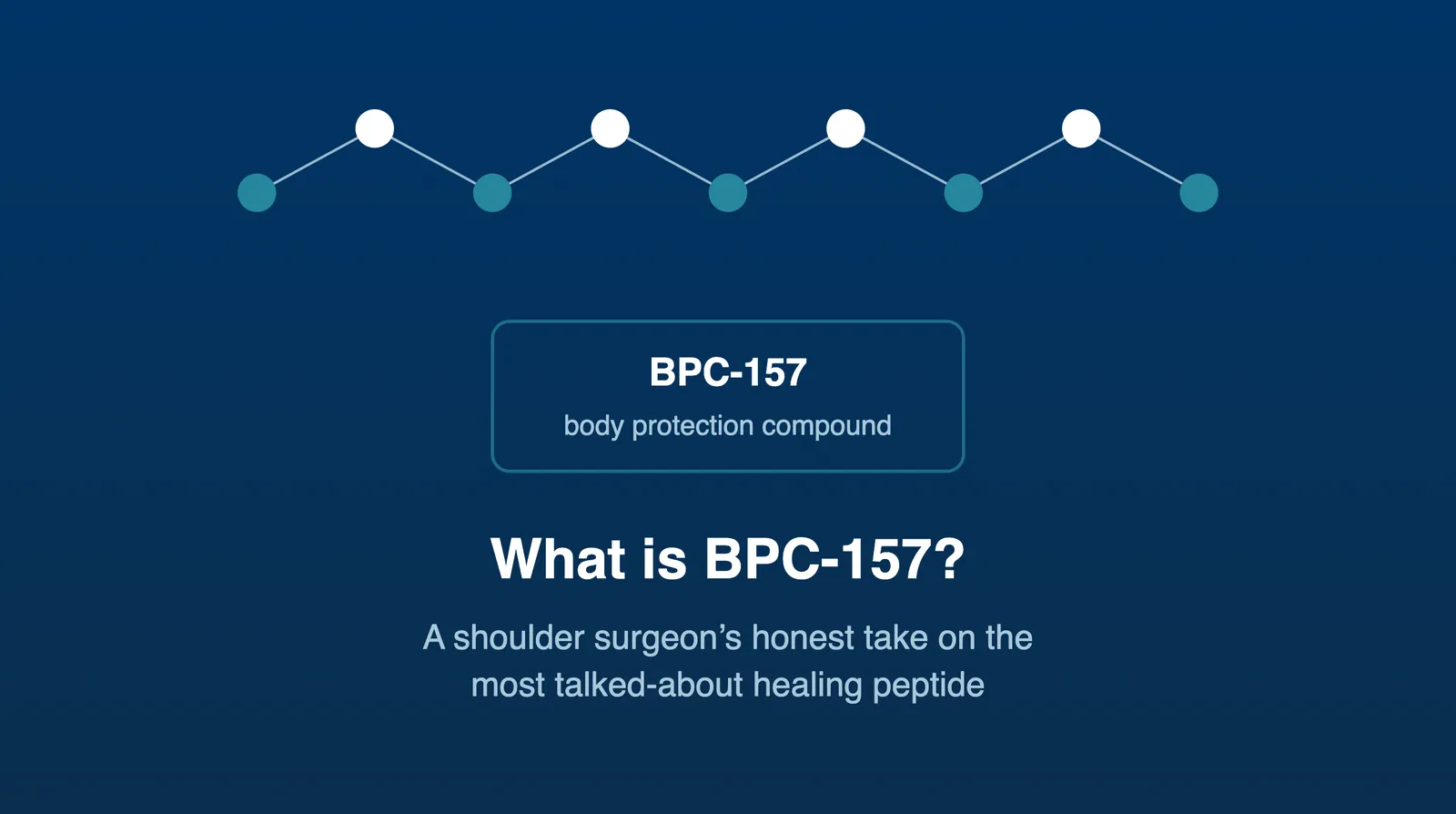
If you've spent any time researching shoulder surgery recovery online, you've probably come across BPC-157. It's everywhere right now — fitness forums, longevity podcasts, biohacking communities. The claims range from remarkable to outrageous. As a shoulder surgeon who has spent over a decade studying rotator cuff biology, I want to give you a grounded, honest assessment of what this compound actually is, what the science does and doesn't support, and why I think the conversation around it matters.
BPC-157 stands for Body Protection Compound-157. It's a synthetic pentadecapeptide — a chain of 15 amino acids — derived from a protective protein found in gastric juice. It was originally studied for its effects on gastrointestinal healing, but interest has expanded significantly into musculoskeletal applications over the past two decades.
The key thing to understand is that BPC-157 is not a hormone, not a growth factor, and not a steroid. It's a signaling peptide — a short amino acid sequence that modulates specific biological pathways rather than overwhelming the system with an exogenous hormone signal.
From a shoulder surgery perspective, three biological mechanisms make BPC-157 worth understanding.
Angiogenesis and the VEGFR2 pathway. One of the central challenges in rotator cuff healing is vascularity — or the lack of it. The critical zone of the supraspinatus tendon, where most tears occur, is notably hypovascular. BPC-157 appears to upregulate VEGF (vascular endothelial growth factor) signaling through the VEGFR2-Akt-eNOS pathway, promoting new blood vessel formation into healing tissue. Better blood supply means more oxygen and nutrient delivery to a repair site.
Tendon fibroblast activity. Preclinical studies have shown BPC-157 stimulates tendon fibroblast migration and proliferation — the cells responsible for laying down new collagen at a repair site. In rat models of Achilles tendon transection, BPC-157-treated tendons showed accelerated organization of collagen fibers and improved tensile strength at early healing timepoints.
Anti-inflammatory modulation. BPC-157 appears to modulate the inflammatory cascade in a nuanced way — reducing excessive or prolonged inflammation without fully suppressing the early inflammatory response that's actually necessary for healing initiation. This is meaningfully different from NSAIDs or corticosteroids, which blunt inflammation broadly and can impair tendon healing when used perioperatively.
Here's where I have to be direct with you: the vast majority of BPC-157 research is preclinical. That means animal models — predominantly rats — not human clinical trials. The mechanistic work is compelling. The in vivo results in animals have been consistently positive across multiple research groups. But we do not yet have well-designed randomized controlled trials in humans that confirm these effects translate to clinical outcomes.
That's not a reason to dismiss the compound. Plenty of biologics we use in surgery today passed through the same preclinical pathway before clinical validation. But it is a reason to be skeptical of anyone making definitive outcome claims. The biology is promising. The human data is not yet there.
My position: the mechanistic rationale is sound and the preclinical signal is strong enough that I think this is a legitimate area of clinical inquiry. That's different from saying we know it works in humans at the doses and timing currently being used in practice.
In 2023, the FDA removed BPC-157 from the list of bulk substances eligible for use in compounding pharmacies. This means that licensed 503A compounding pharmacies cannot legally compound injectable BPC-157 for patient use under current federal guidance. This is an important regulatory reality that anyone prescribing or using this compound needs to understand.
This doesn't mean the compound is dangerous — the FDA's decision was based on a lack of clinical evidence, not on safety signals. But it does mean that sourcing, quality control, and prescribing context matter enormously. Research-grade peptides obtained outside a pharmacy system have no standardized quality oversight.
For patients undergoing rotator cuff repair or shoulder replacement, the perioperative window is biologically critical. The decisions made in the weeks before and after surgery — about nutrition, activity, inflammation management, and tissue signaling — can meaningfully influence healing outcomes. The question isn't whether biology matters. It's whether we can favorably modulate it.
BPC-157 sits in a category I'd describe as mechanistically compelling, preclinically supported, and clinically underinvestigated. For patients interested in perioperative optimization, it warrants a real conversation with their surgical team — one grounded in what we know, what we don't, and how to do it responsibly if they proceed.
In future posts, I'll get into the specific timing rationale I use — including why the phase of healing the compound is targeting should determine when you start and, critically, when you stop.
Medical disclaimer: This content is for educational purposes only and does not constitute medical advice. BPC-157 and other peptides discussed here are not FDA-approved for these indications. Always consult your physician before starting any peptide protocol.

Keep reading
should-i-get-a-second-opinion-before-shoulder-surgery
is-a-cortisone-shot-in-the-shoulder-worth-it
can-a-torn-labrum-in-the-shoulder-heal-on-its-own
Oregon Shoulder Institute
massive-rotator-cuff-tear-with-severe-muscle-damage-repair-or-replacement
Book a consultation in Medford or Grants Pass, or send your MRI for a second opinion from anywhere in the country.