Oregon Shoulder Institute
Rotator Cuff Repair Outcomes: Dr. Patrick Denard's Published Results
rotator-cuff-repair-outcomes-dr-patrick-denard
Short answer: Superior capsular reconstruction (SCR) is an arthroscopic operation that uses a graft to rebuild the top of the shoulder capsule when the rotator cuff can't be repaired, and it is meant for shoulders with little or no arthritis. Dr. Patrick Denard of Oregon Shoulder Institute co-authored the 2016 arthroscopic SCR technique papers, and he first checks whether a tear called "irreparable" can still be repaired before choosing among SCR, partial repair, tendon transfer, a balloon spacer or a reverse replacement.
"Irreparable" often gets used too early. An MRI can suggest a tear will be hard to fix, but the real test happens at surgery. In a study I co-authored of 86 massive tears, 88% were fully repaired. Warning signs on imaging did raise the odds of an incomplete repair: 30% with a positive tangent sign versus 6.3% without, and 42.9% with advanced fatty change in the supraspinatus versus 5.7% without. Even so, most tears with those signs were still fully repaired (Sheean 2018, PMID 29273256).
Repair can work even when the arm has stopped lifting. In a prospective multicenter study of 56 patients with pseudoparalysis and no significant arthritis, arthroscopic repair restored overhead lifting in 53 (95%), including all 8 with advanced fatty change in the muscle (Denard 2015, PMID 26297521). In a series of 101 massive tears repaired arthroscopically at my practice and a second center, 88% of patients were satisfied at a minimum of four years and 5% went on to a reverse replacement (Pak 2023, PMID 37645387).
I start with two questions: is there arthritis in the joint, and how well does the arm work? Those decide whether we aim to preserve your own joint or move to a reverse replacement. If preserving the joint is the goal, repairability, function and age guide the rest (Denard 2023, PMID 37866877).
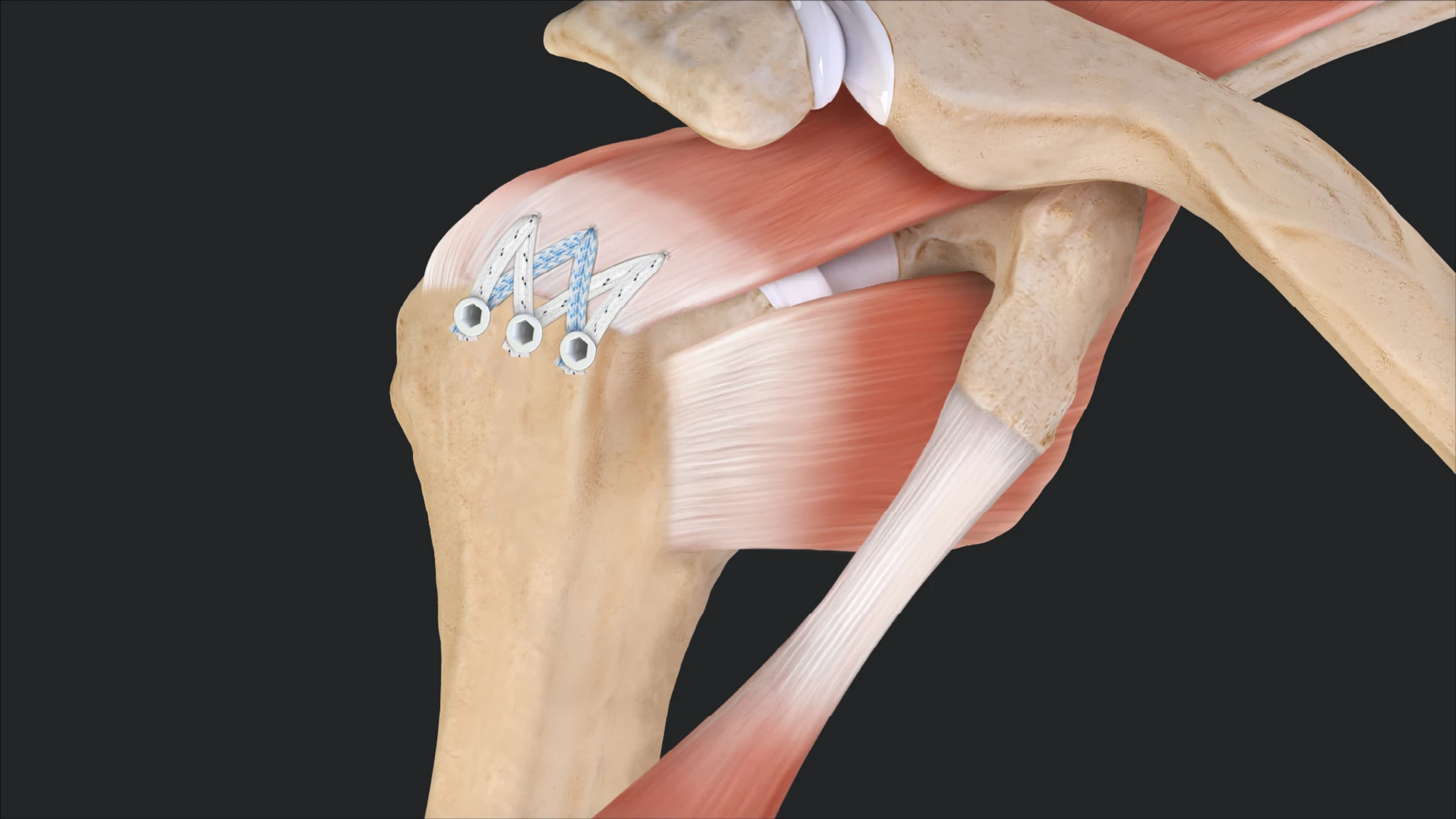
The superior capsule is a thin layer under the rotator cuff that keeps the ball of the shoulder centered. When a large tear takes it away, the ball rides up and the shoulder loses leverage. SCR rebuilds that layer with a graft anchored to the socket and to the top of the arm bone. The arthroscopic technique I co-authored with Dr. Stephen Burkhart and colleagues is based on Dr. Mihata's original concept, which used a graft from the thigh; we use an acellular dermal allograft (Burkhart 2016, PMID 28149739; Adams 2016, PMID 27552457).
Careful selection matters. In my first multicenter series I wrote that precise indications are important and graft healing was low in our initial experience (Denard 2018, PMID 29146165).
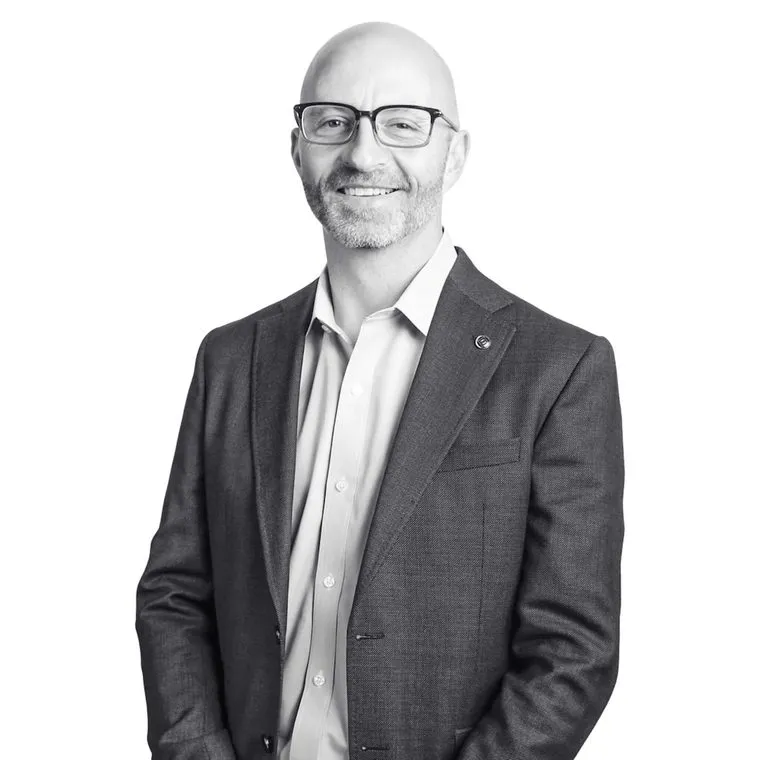
Dr. Patrick J. Denard is a fellowship-trained shoulder surgeon and the founder of Oregon Shoulder Institute in Medford, Oregon. He has performed more than 10,000 shoulder surgeries. He co-authored the 2016 arthroscopic superior capsular reconstruction technique papers with Dr. Stephen Burkhart and Dr. Christopher Adams and was first author of a 2018 multicenter study of SCR results. PubMed lists more than 300 of his peer-reviewed papers, over 130 of them on the rotator cuff. Expertscape ranked him #2 in the world for rotator cuff repair in 2021 and seventh in the world in 2023.
SCR is an arthroscopic operation that rebuilds the top of the shoulder capsule with a graft when the rotator cuff can't be repaired. It helps keep the ball of the shoulder centered so the remaining muscles can work.
Patients whose tear can't be repaired, or whose tendon is unlikely to heal, and whose joint has little or no arthritis. Results are better when SCR is the first operation rather than a revision.
No. In Dr. Denard's early multicenter series, 45% of the grafts imaged by MRI had fully healed, yet 74.6% of cases were considered a success (Denard 2018, PMID 29146165).
They suit different patients. In one comparison, SCR took longer but had fewer complications (3% versus 13%), with similar value overall (Gabig 2023, PMID 36866303). Arthritis usually points toward a reverse replacement.
Possibly. In one study of 86 massive tears, 88% were fully repaired at surgery (Sheean 2018, PMID 29273256). A review of your MRI by a surgeon who does these repairs often is a good first step.
Published results have been conflicting (Stokes 2026, PMID 41838484). Ask Dr. Denard how it compares with the other options for your tear.
If you've been told your tear is irreparable, Dr. Denard can review your MRI and report remotely and send you a narrated video explaining whether it looks repairable and what he would recommend, typically within 48 hours, for $250. Start a remote MRI review. To be seen in person in Medford or Grants Pass, request an appointment or call 541-608-2595.
This page is for education and is not a substitute for an exam. Study results describe groups of patients and are not a guarantee of any individual result.
Keep reading
Oregon Shoulder Institute
rotator-cuff-repair-outcomes-dr-patrick-denard
Oregon Shoulder Institute
rotator-cuff-repair-recovery-week-by-week
Oregon Shoulder Institute
irreparable-rotator-cuff-tear-superior-capsular-reconstruction
Oregon Shoulder Institute
failed-rotator-cuff-repair-revision-options
Book a consultation in Medford or Grants Pass, or send your MRI for a second opinion from anywhere in the country.