Oregon Shoulder Institute
Massive Rotator Cuff Tear With Severe Muscle Damage: Repair or Replacement?
massive-rotator-cuff-tear-with-severe-muscle-damage-repair-or-replacement
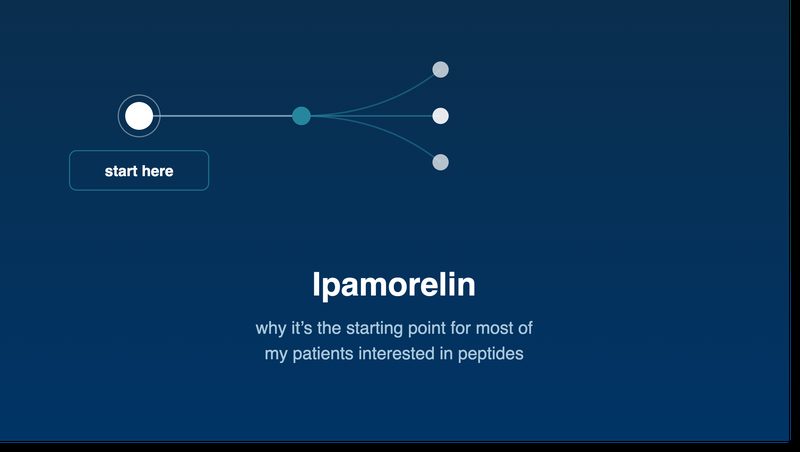
When patients come to me having done their own research on peptides for shoulder surgery recovery, the conversation usually starts with BPC-157 or growth hormone. BPC-157 I've covered elsewhere. Growth hormone — specifically synthetic HGH — is a different category entirely: a controlled substance with a meaningful side effect profile, not something appropriate to discuss as a routine perioperative adjunct. What I usually end up recommending as a foundation, if a patient wants to explore this space responsibly, is ipamorelin. Here's why.
Ipamorelin is a growth hormone releasing peptide (GHRP) — a class of compounds that stimulate the pituitary gland to release growth hormone naturally, in response to the body's own signaling. It's not synthetic growth hormone. It doesn't introduce exogenous GH into the system. It prompts the body to produce more of its own.
The distinction matters enormously from both a safety and a physiological standpoint. Exogenous HGH suppresses the body's own production feedback loop. GHRPs like ipamorelin work with that loop rather than overriding it — the pituitary responds to ipamorelin stimulation, releases a GH pulse, and the normal negative feedback mechanisms remain intact.
What distinguishes ipamorelin within the GHRP class is its selectivity. Earlier GHRPs — GHRP-2, GHRP-6 — stimulate GH release but also meaningfully elevate cortisol and prolactin. This is a significant drawback in a surgical context. Cortisol is catabolic: it promotes muscle breakdown and can impair tissue repair. Prolactin elevation has its own set of downstream effects that aren't desirable in the perioperative period.
Ipamorelin was specifically developed to achieve GHRP activity with minimal cortisol and prolactin stimulation. In preclinical and early clinical studies, it produces robust GH pulses without the cortisol and prolactin blunting seen with other GHRPs. For a patient recovering from rotator cuff repair or shoulder arthroplasty, this selectivity profile is exactly what you want.
Growth hormone's primary anabolic effects on musculoskeletal tissue are mediated largely through IGF-1 (insulin-like growth factor 1), produced mainly in the liver in response to GH stimulation. IGF-1 is one of the most important anabolic signals for tendon, muscle, and bone — all three of which are relevant to shoulder surgical recovery.
In rotator cuff repair, the healing tendon, the attached muscle (which undergoes significant atrophy after a cuff tear), and the bone-tendon interface all benefit from an optimized anabolic environment. Ipamorelin's downstream IGF-1 elevation supports all three. In shoulder arthroplasty, bone remodeling around the implant and soft tissue healing of the subscapularis repair both fall within the window of IGF-1 influence.
Ipamorelin has a notably favorable tolerability profile relative to other peptides that operate on the GH axis. The most commonly reported side effect is mild, transient flushing at injection — a known GHRP class effect that is generally dose-dependent and self-limiting. Because it doesn't significantly affect cortisol or prolactin, patients don't experience the hunger stimulation seen with GHRP-6 or the more pronounced hormonal side effects associated with less selective compounds.
For a patient who has no prior experience with peptides, introducing a highly selective compound with a well-characterized tolerability profile is the right starting point. You establish a baseline, monitor labs, and understand how the individual responds before adding complexity to the protocol.
I want to be clear about something: ipamorelin is not a supplement you pick up at a health food store and self-administer. Responsible use means physician oversight, baseline and follow-up lab work (IGF-1 levels, and broader metabolic markers), compounding pharmacy sourcing with certificates of analysis, and individualized dosing based on the patient's hormonal baseline and recovery context.
It also means honest conversations about what we know and what we don't. The GH axis biology is well-characterized. The specific clinical outcomes data for ipamorelin in perioperative shoulder surgery patients doesn't yet exist in the formal trial literature. What we have is mechanistic rationale, favorable preclinical data, and clinical experience — which is a reasonable foundation for informed, supervised use, not for unsupervised self-experimentation.
If you're interested in whether ipamorelin or other peptides might be appropriate for your shoulder surgery recovery, the conversation starts with labs, a complete health history, and an honest assessment of your specific situation.
⚠️ Medical Disclaimer: This content is for educational purposes only and does not constitute medical advice. BPC-157 and other peptides discussed here are not FDA-approved for these indications. Always consult your physician before starting any peptide protocol.

Keep reading
Oregon Shoulder Institute
massive-rotator-cuff-tear-with-severe-muscle-damage-repair-or-replacement
Oregon Shoulder Institute
oregon-shoulder-institute-adopts-new-magnesium-supplement-recommendation-to-pre-and-post-procedure-protocol
why-are-women-more-prone-to-frozen-shoulder
womens-shoulder-and-joint-health-how-to-lower-inflammation
Book a consultation in Medford or Grants Pass, or send your MRI for a second opinion from anywhere in the country.


