Oregon Shoulder Institute
Rotator Cuff Repair Outcomes: Dr. Patrick Denard's Published Results
rotator-cuff-repair-outcomes-dr-patrick-denard
The All-Inside Knotless Technique Developed at Oregon Shoulder Institute
By Patrick J. Denard, MD | Oregon Shoulder Institute
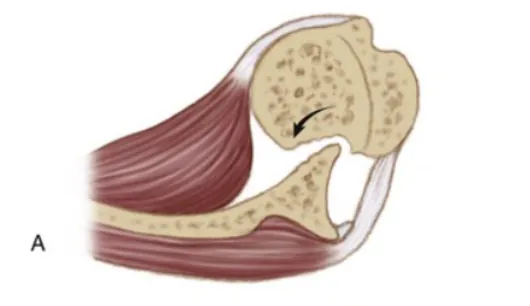
Remplissage has become one of the most important tools in shoulder instability surgery over the past decade. By filling in the Hill-Sachs lesion — the dent on the back of the ball of the shoulder joint that forms after dislocation — with posterior capsule and tendon, the procedure prevents the lesion from catching on the front of the socket during shoulder movement. Multiple clinical studies have confirmed that adding remplissage to a Bankart repair dramatically reduces the risk of shoulder redislocation, particularly in high-risk patients such as contact athletes.
But for years, one thing held the procedure back from wider adoption: it was technically demanding. The original technique required surgeons to access the subacromial space — the area above the shoulder joint — to tie down the repair. This added operative time, created risk of suture damage, and was particularly difficult because the inferior anchor often sat at the level of the teres minor muscle, making access awkward.
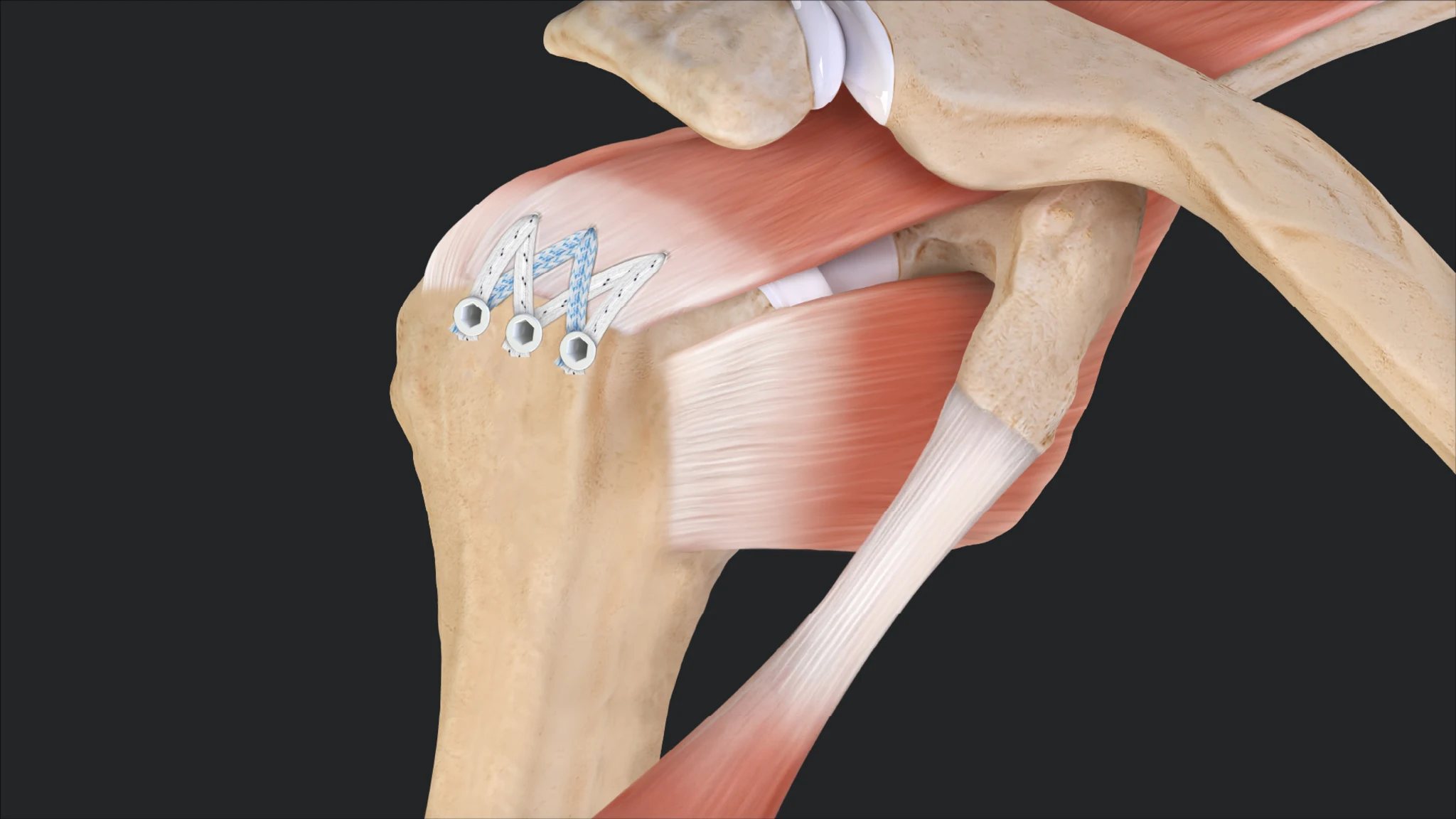
I developed a new approach to solve this problem: an all-inside knotless remplissage technique that eliminates the need to enter the subacromial space entirely. Published in Arthroscopy Techniques in 2021, this technique has since been widely adopted by shoulder surgeons around the world as the standard approach for performing remplissage.
"By avoiding knot tying or accessing the subacromial space, the efficiency of the procedure is improved." — Callegari, Phillips & Denard, Arthroscopy Techniques, 2021
Remplissage is most commonly indicated when a patient has an "off-track" Hill-Sachs lesion — one that is positioned to engage with the front rim of the glenoid during shoulder rotation. When this is identified, the surgeon needs to fill the defect with tissue to eliminate the catching point. The technique works well; the question has always been how to execute it most efficiently and safely.
The original remplissage description, published by Purchase and colleagues in 2008, used two anchors with knotted sutures. While effective, this required the surgeon to move into the subacromial space after completing the Bankart repair to tie the knots — adding a separate operative step with its own set of challenges.
Subsequent refinements introduced knotless interconnected anchors, which improved fixation strength. Biomechanical studies showed that knotless constructs have significantly higher load-to-failure strength compared to knotted ones (1,080 N vs 591 N). However, even these improved techniques still required subacromial access. The step remained a friction point for many surgeons — one that added time and complexity and likely limited how many patients could benefit from the procedure.
The technique I developed at Oregon Shoulder Institute solves the subacromial access problem by keeping the entire procedure inside the glenohumeral joint. Here is the core of how it works, in terms a patient can understand:
The result is a mechanically strong, clean repair that achieves the goals of remplissage — filling the defect, preventing engagement — while reducing operative time and technical complexity.
For patients, surgical technique details can seem remote. But the efficiency and safety of how a procedure is performed has real-world implications.
A simpler, faster technique means less time under anesthesia and less overall surgical burden. Eliminating the subacromial access step removes a source of potential suture damage and reduces one of the more technically demanding aspects of the procedure. And a stronger knotless construct means more reliable fixation during the healing period — which translates directly to how well the repair holds up as the patient returns to activity.
Perhaps most importantly, a technique that is easier to perform reliably means more surgeons can offer it to more patients. Remplissage is one of the most effective tools available for preventing shoulder redislocation in patients with Hill-Sachs lesions. Any refinement that removes barriers to its consistent use ultimately benefits the patients who need it.
The knotless all-inside approach has been adopted by shoulder surgeons internationally and is now considered a standard technique for remplissage in arthroscopic shoulder stabilization surgery.
Remplissage is indicated when a patient has anterior shoulder instability with a Hill-Sachs lesion that is classified as "off-track" — meaning it will engage with the glenoid rim during shoulder motion and create a mechanical cause of redislocation. The decision is based on careful measurement of:
In our practice, patients with less than 25% glenoid bone loss and an off-track Hill-Sachs lesion are managed with arthroscopic Bankart repair combined with remplissage. Patients with 25% or greater glenoid bone loss are typically managed with the Latarjet procedure, which transfers a piece of bone to rebuild the front of the socket.
As evidence has grown — including our own multicenter research showing dramatic redislocation reduction even in patients with on-track but near-track lesions — the indications for remplissage have broadened. High-risk patients such as young contact athletes with lesions close to the glenoid track boundary may benefit from remplissage even when the lesion technically qualifies as on-track.
Recovery following combined Bankart repair and remplissage follows a structured progression designed to protect the repair while restoring shoulder function:
Rehabilitation is a critical part of the recovery process. The structured timeline is not arbitrary — it reflects the biological healing phases of the labrum, capsule, and tendon fixation. Patients who respect the protocol and commit to their rehabilitation program have consistently better outcomes.
Remplissage is one of the most effective techniques in shoulder surgery for preventing recurrent instability in patients with Hill-Sachs lesions. The all-inside knotless technique developed at Oregon Shoulder Institute represents a meaningful advance in how the procedure is performed — making it faster, simpler, more reliable, and accessible to more surgeons and patients.
For patients with recurrent shoulder instability, a thorough evaluation of glenoid and humeral bone loss is essential to determine the right surgical approach. When remplissage is indicated, the all-inside knotless method provides strong, reproducible fixation without the complexity and added operative burden of traditional subacromial techniques.
If you have experienced shoulder instability or recurrent dislocations and are wondering whether surgery is right for you, the most important step is a detailed evaluation that includes careful imaging analysis of both sides of the joint.
Patrick J. Denard, MD is a fellowship-trained orthopedic surgeon specializing in shoulder surgery at the Oregon Shoulder Institute in Medford, Oregon. He is the senior author of "All-Inside Knotless Remplissage Technique," published in Arthroscopy Techniques (2021). This technique has been adopted by shoulder surgeons internationally and is now widely used as a standard approach for arthroscopic remplissage.

Keep reading
Oregon Shoulder Institute
rotator-cuff-repair-outcomes-dr-patrick-denard
Oregon Shoulder Institute
rotator-cuff-repair-recovery-week-by-week
Oregon Shoulder Institute
irreparable-rotator-cuff-tear-superior-capsular-reconstruction
Oregon Shoulder Institute
failed-rotator-cuff-repair-revision-options
Book a consultation in Medford or Grants Pass, or send your MRI for a second opinion from anywhere in the country.